Choosing the right Key Cutting Machine is essential for locksmiths and automotive professionals. This comparison examines three top models — Xhorse Dolphin XP005, CG Godzilla, and 2M2 TANK 2 Pro — highlighting key differences in performance, features, and value to help you select the best machine for your needs.
Best Key Cutting Machine Comparison

At a Glance
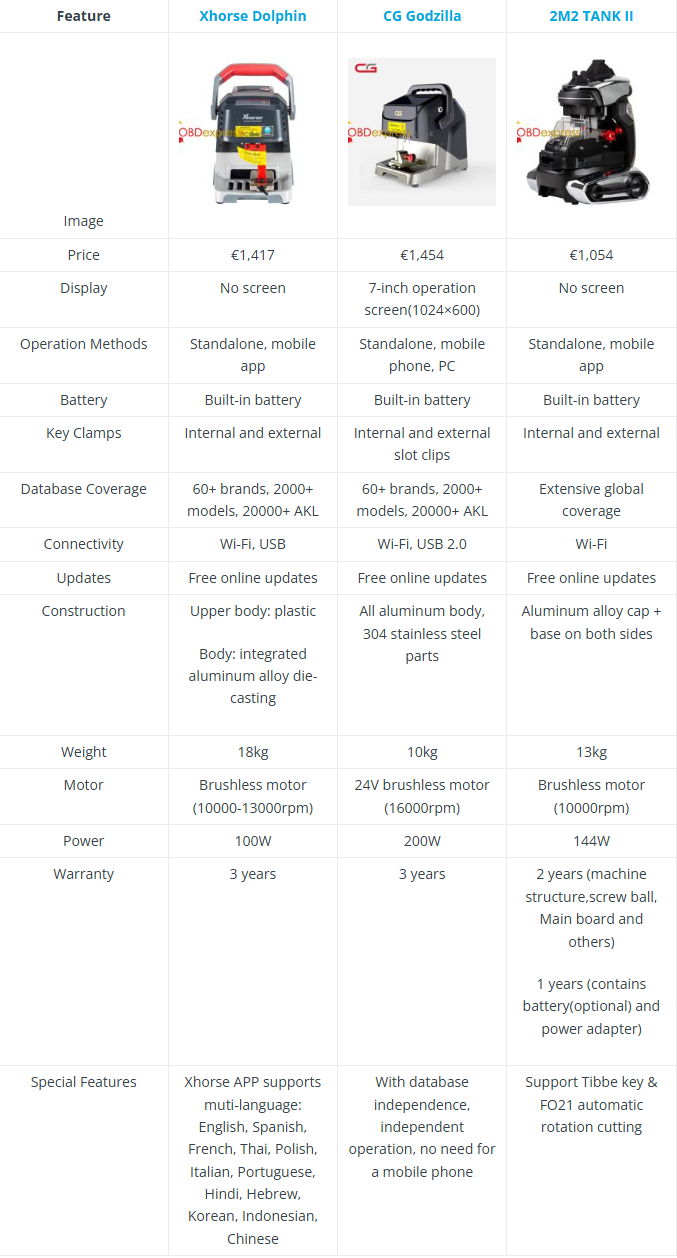
Xhorse Dolphin XP005 (€1,417) — Ideal for international workshops requiring multilingual support across 12 languages. Features medium-speed motor and robust construction.
CG Godzilla (€1,454) — Premium choice with superior 7-inch operation screen display and fastest 16,000 RPM motor. Lightweight yet durable with database independence.
2M2 TANK 2 Pro (€1,054) — Budget-friendly option specializing in automotive Tibbe keys. Reliable performance with cost-effective warranty structure.
Which Key Cutting Machine Wins?
- Performance:
Motor Speed: CG Godzilla (16,000 RPM) > Xhorse Dolphin (10,000–13,000 RPM) > 2M2 TANK (10,000 RPM)
Power Consumption: CG Godzilla (200W) > 2M2 TANK (144W) > Xhorse Dolphin (100W)
- Design & Build:
Display: Only CG Godzilla features 7-inch operation screen.
Weight: Xhorse Dolphin (18kg) > 2M2 TANK (13kg) > CG Godzilla (10kg)
Construction: All feature durable metal construction with premium materials
- Connectivity & Features:
All models offer Wi-Fi connectivity and free online updates
Database: All cover 60+ brands, 2000+ models, 20000+ AKL
Special Features: Xhorse (multilingual support), CG (standalone operation), 2M2 TANK (Tibbe key specialization)
Recommendation Summary
For International Businesses: Dolphin XP005 — Superior language support for global operations
For Premium Performance: CG Key Cutting Machine — Best display and fastest cutting speed for high-volume shops
For Budget-Conscious Users: 2M2 TANK CNC — Excellent value with specialized automotive capabilities
All three machines provide professional-grade performance with comprehensive database coverage. The optimal choice depends on your specific operational needs, budget considerations, and technical requirements.



No comments:
Post a Comment